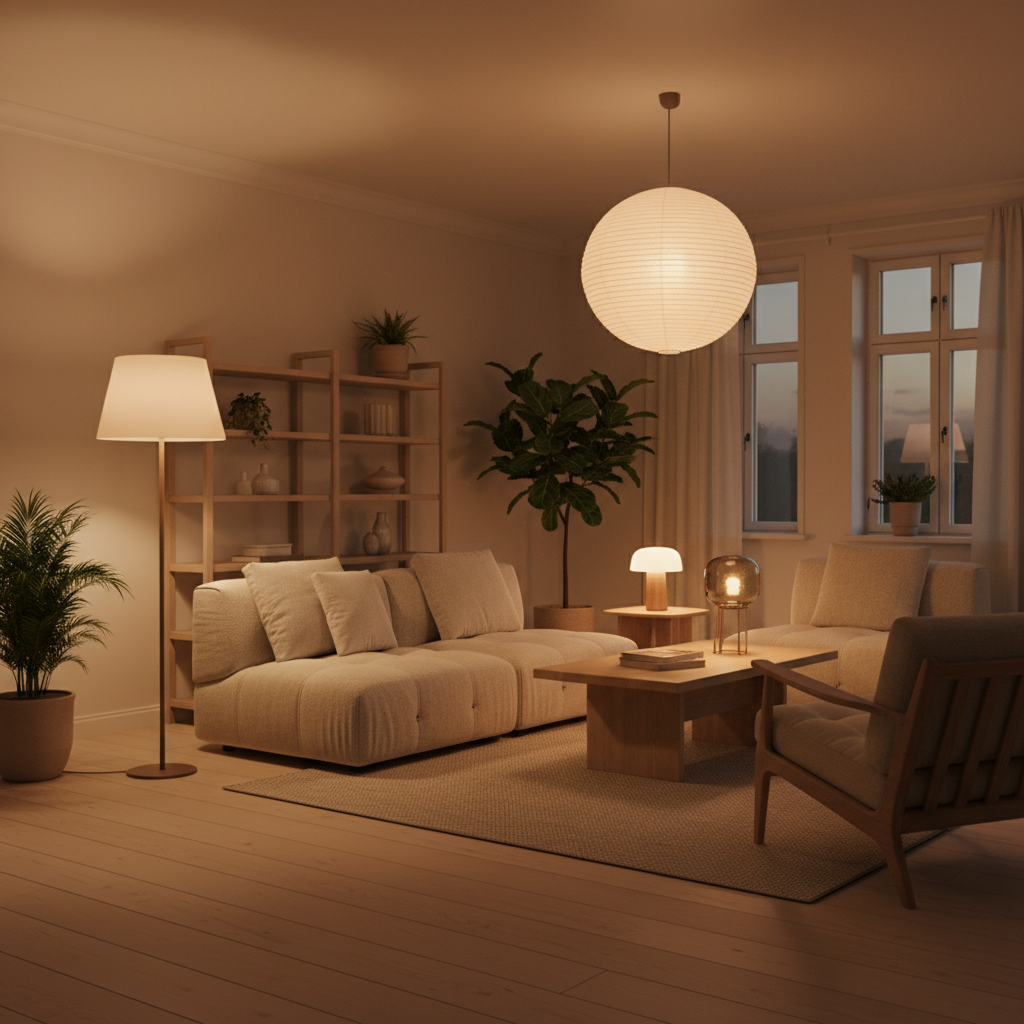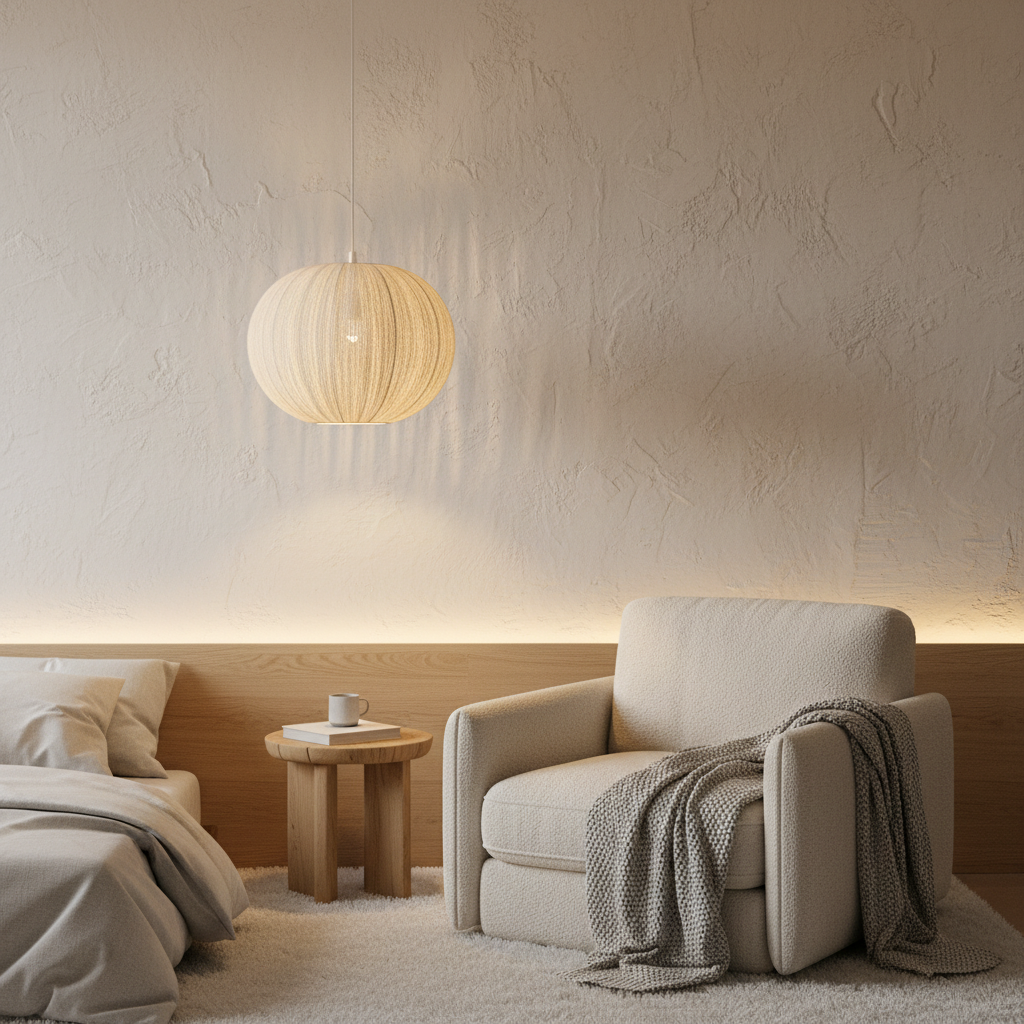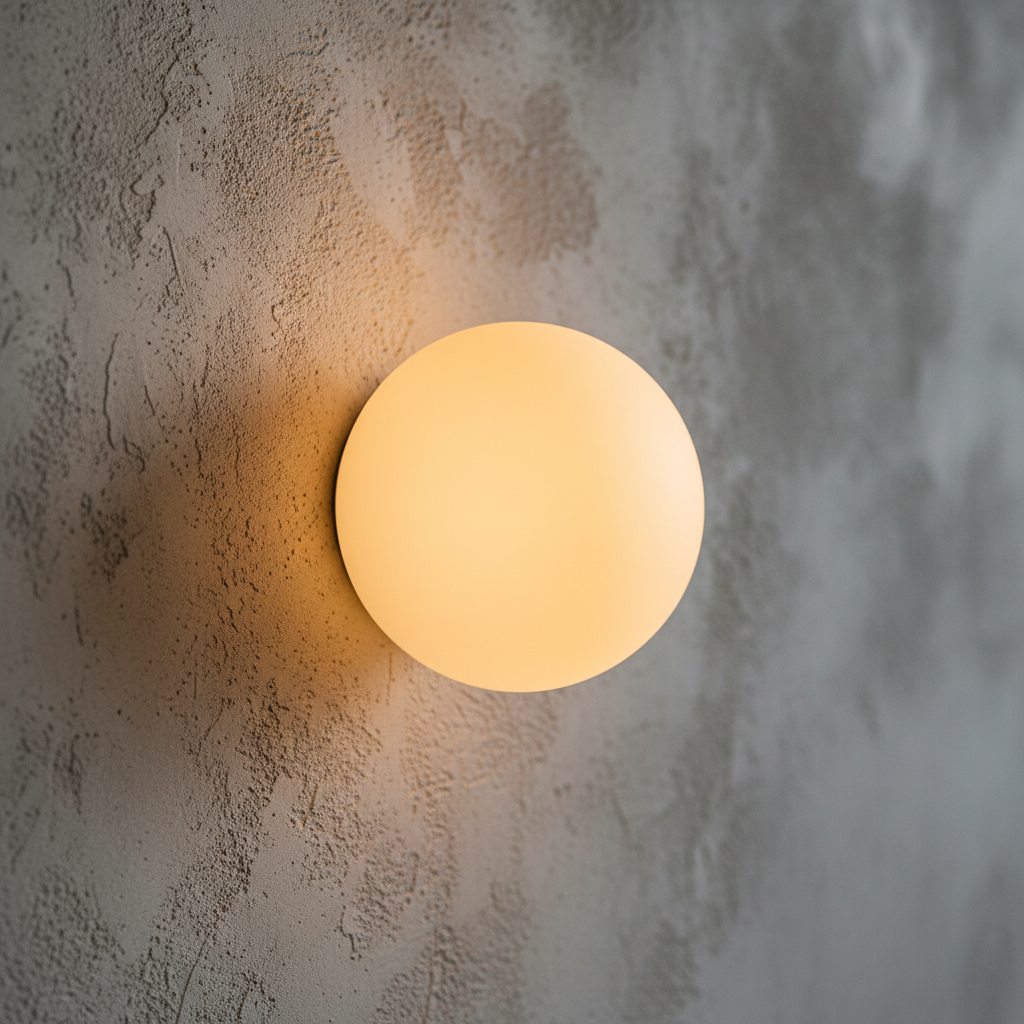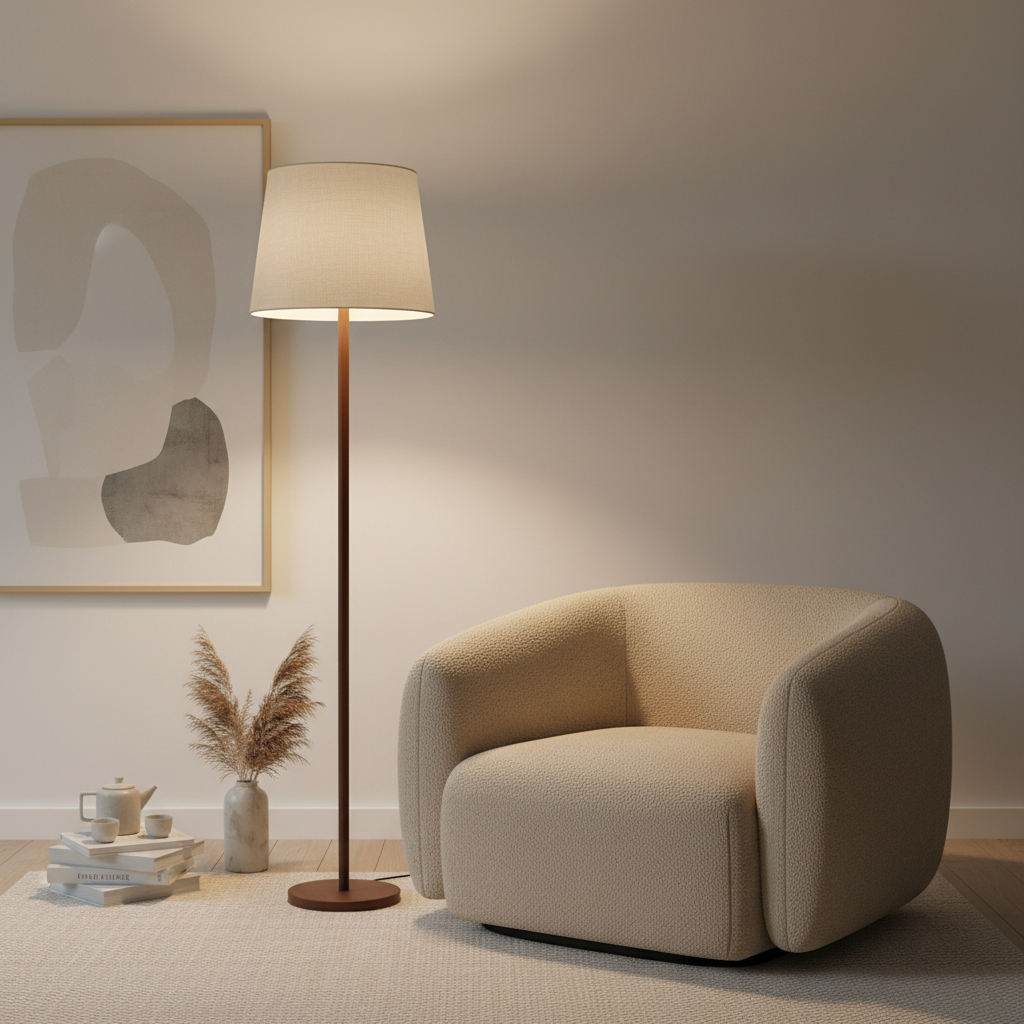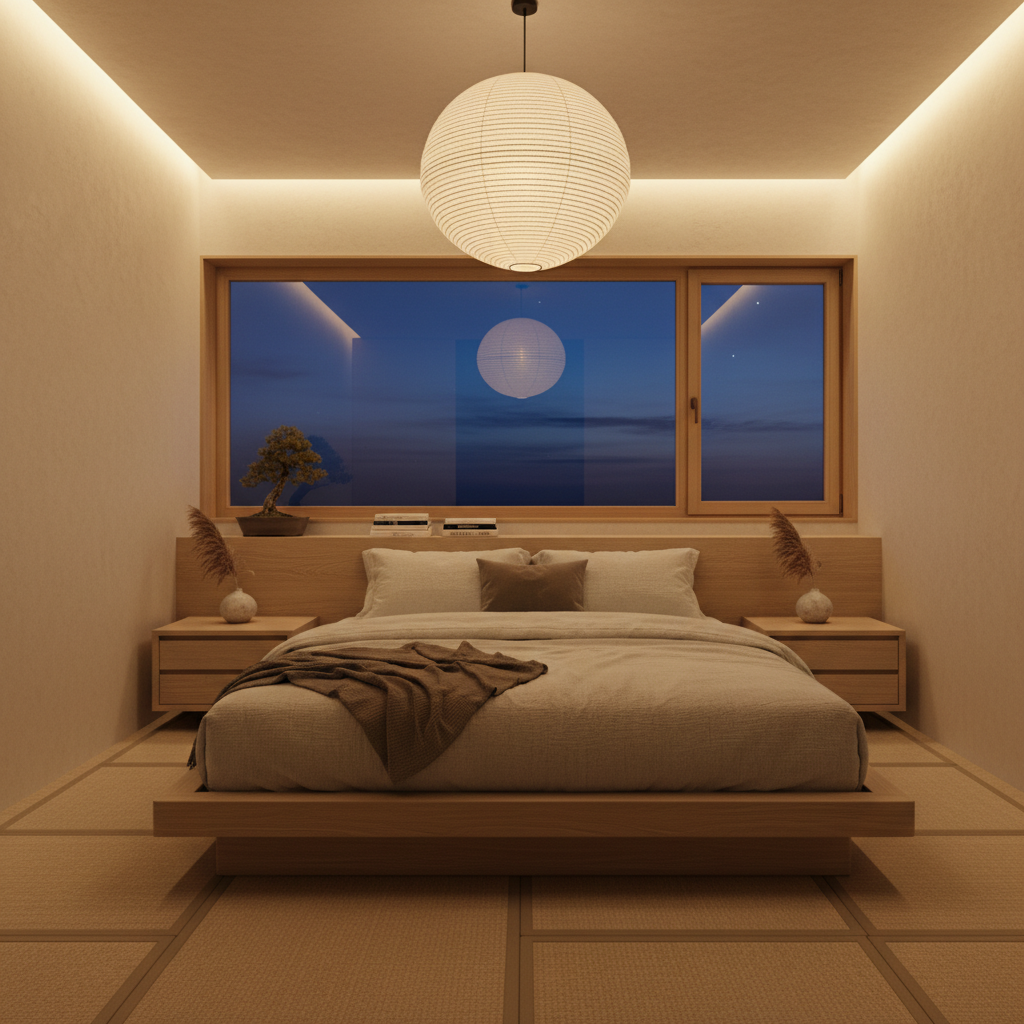
There’s a quiet art to ending the day well. We think about clean sheets and calming scents—but the most powerful “sleep signal” in your room is often the simplest: light. Warm vs cool lighting isn’t just an aesthetic choice. It changes how your bedroom feels, and it can influence how easily your mind shifts into rest mode.
Color Temperature 101 (Kelvin Made Simple)
Light “color” is measured in Kelvin (K):
- 2000K–3000K: warm, amber, candle/sunset-like
- 3500K–4100K: neutral white (more “task-y”)
- 5000K–6500K: cool/daylight white (crisp, energizing)
At night, your goal is usually warm + gentle, not bright + clinical.
Why Warm vs Cool Lighting Matters at Night
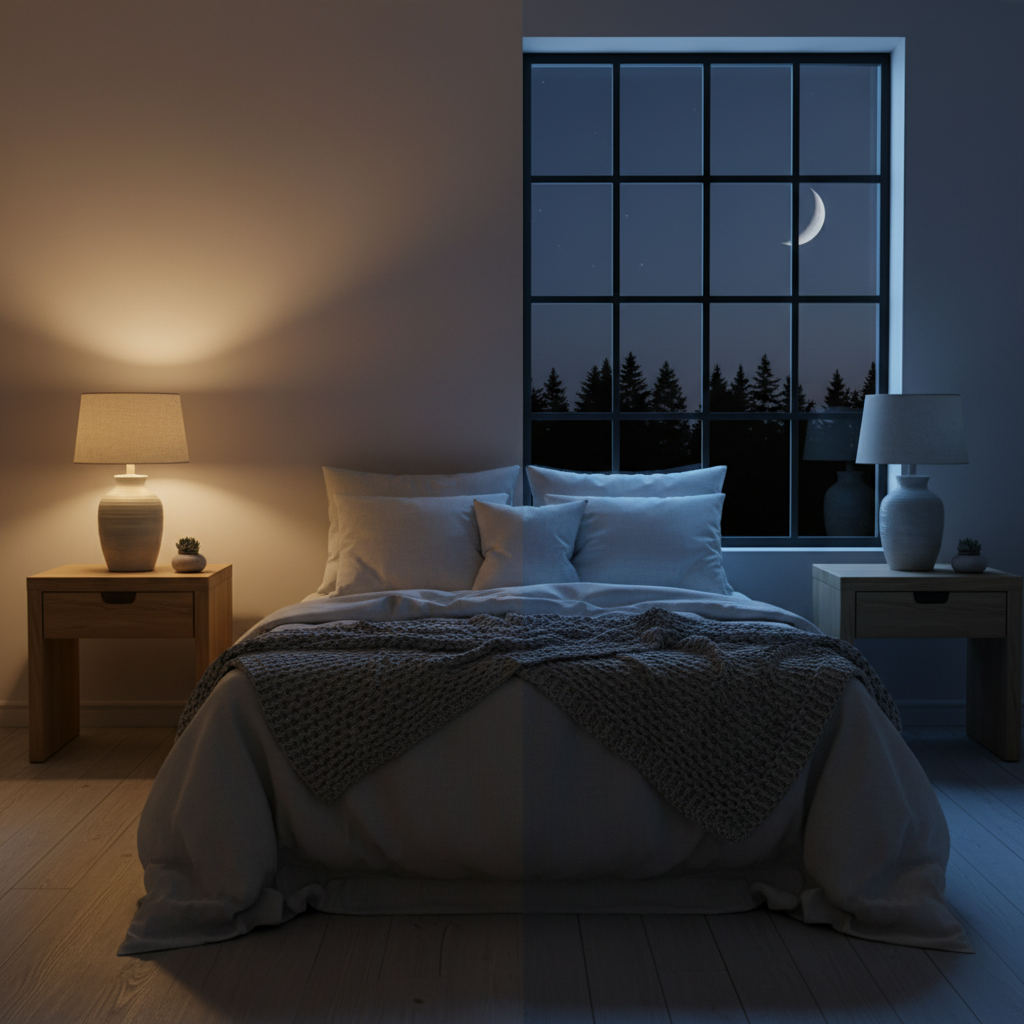
Your body runs on a natural rhythm that responds to light cues. For most of human history, evenings were lit by firelight—warm, low, soft. Modern cool lighting can feel like “daytime indoors,” which makes it harder to wind down.
In simple terms:
- Cool light tends to feel alert, crisp, “go mode”
- Warm light tends to feel soft, safe, “slow mode”
If your bedroom looks beautiful but still feels “wired” at night, the lighting temperature is often the missing piece.
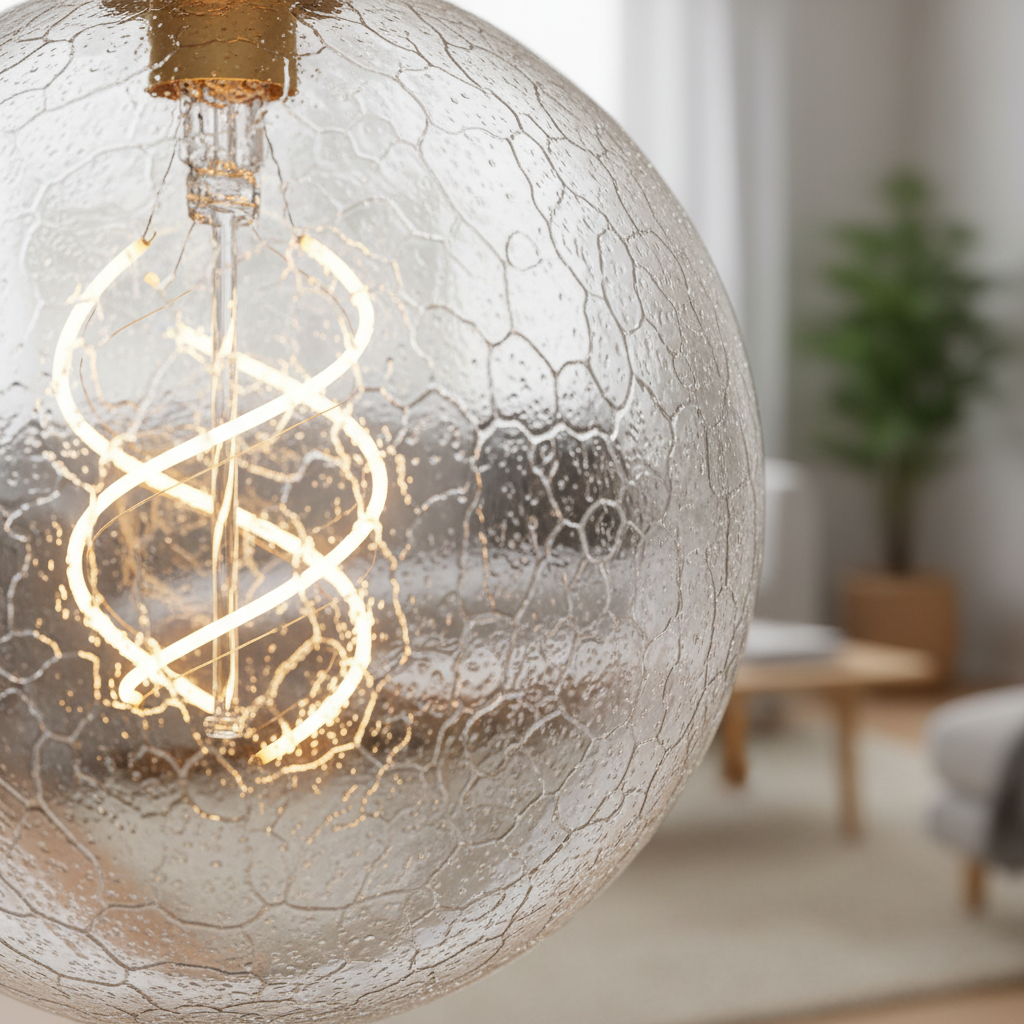
The Sweet Spot: Why 2700K Warm White Works So Well
If you only change one thing, start with your bulbs.
2700K (often labeled Warm White or Soft White) is popular for bedrooms because it:
- feels cozy without looking “orange”
- flatters skin tones and textures (linen, wood, rugs)
- reduces the harsh, sterile vibe that keeps a room feeling like a workspace
Quick rule:
If you want a calm bedroom at night, choose 2700K–3000K for your lamps.
What to Avoid in Bedroom Lighting
Cool “Daylight” bulbs (often 5000K+) can be great for kitchens, garages, daytime tasks, and cleaning. But in a bedroom at night they often feel sterile, too bright even when dim, and more like a clinic/office than a sanctuary.
Also watch out for one bright overhead light. This forces your room into harsh mode whenever you need light at all.
How to Build Calm Ambient Light (Layering Method)
The fastest way to make a bedroom feel high-end and sleep-friendly is layered lighting—using multiple soft sources instead of one bright one.
1) Base Layer (optional)
If you use overhead lighting, keep it warm and dimmable. But for evenings, you’ll rely more on lamps.
2) Task Layer (bedside)
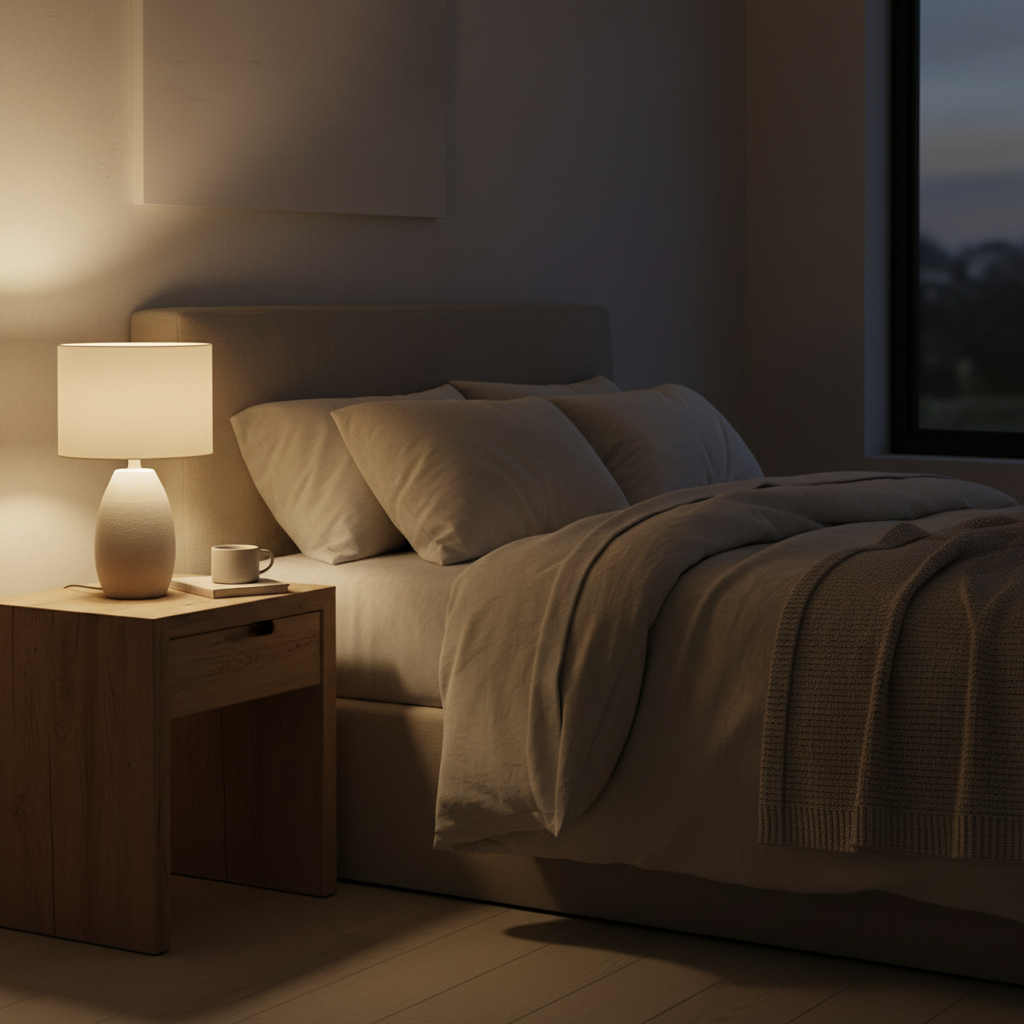
A bedside lamp with a 2700K bulb is the anchor.
3) Accent Layer (soft glow)
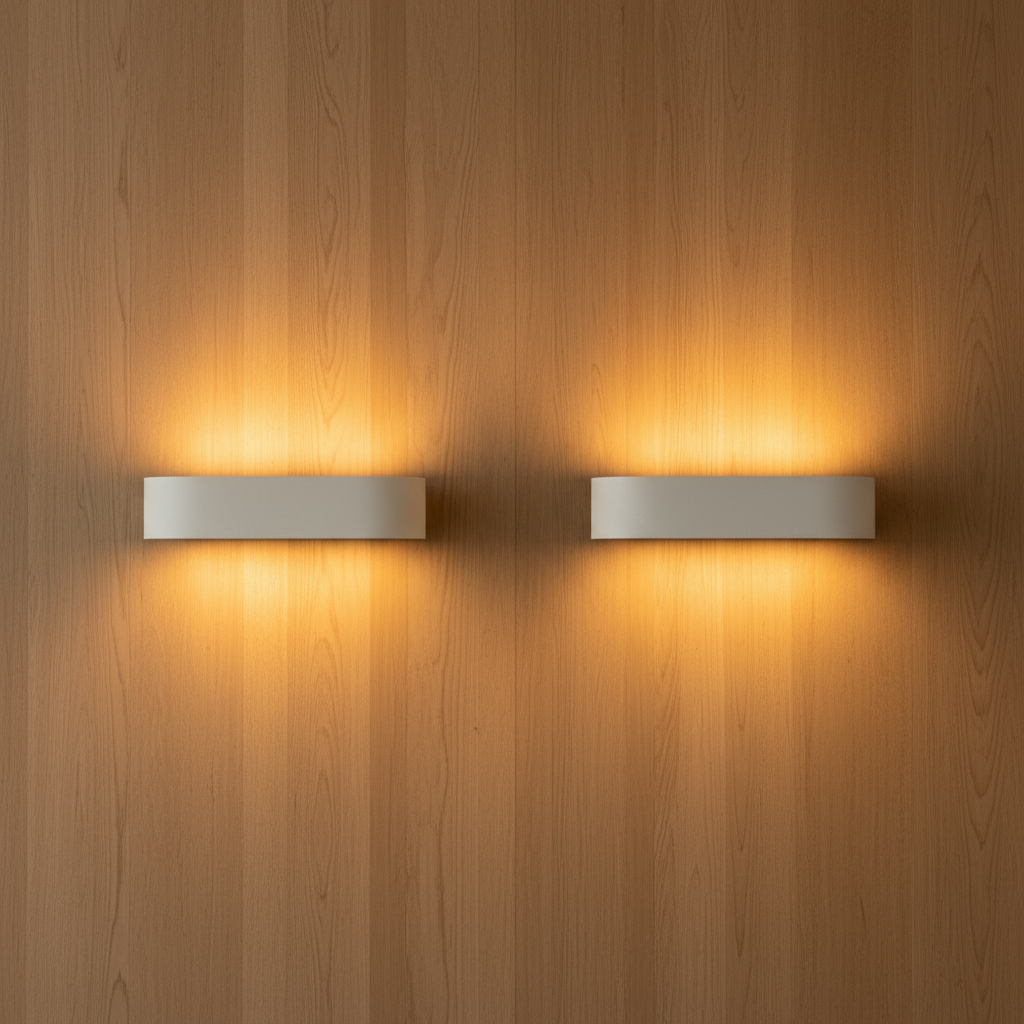
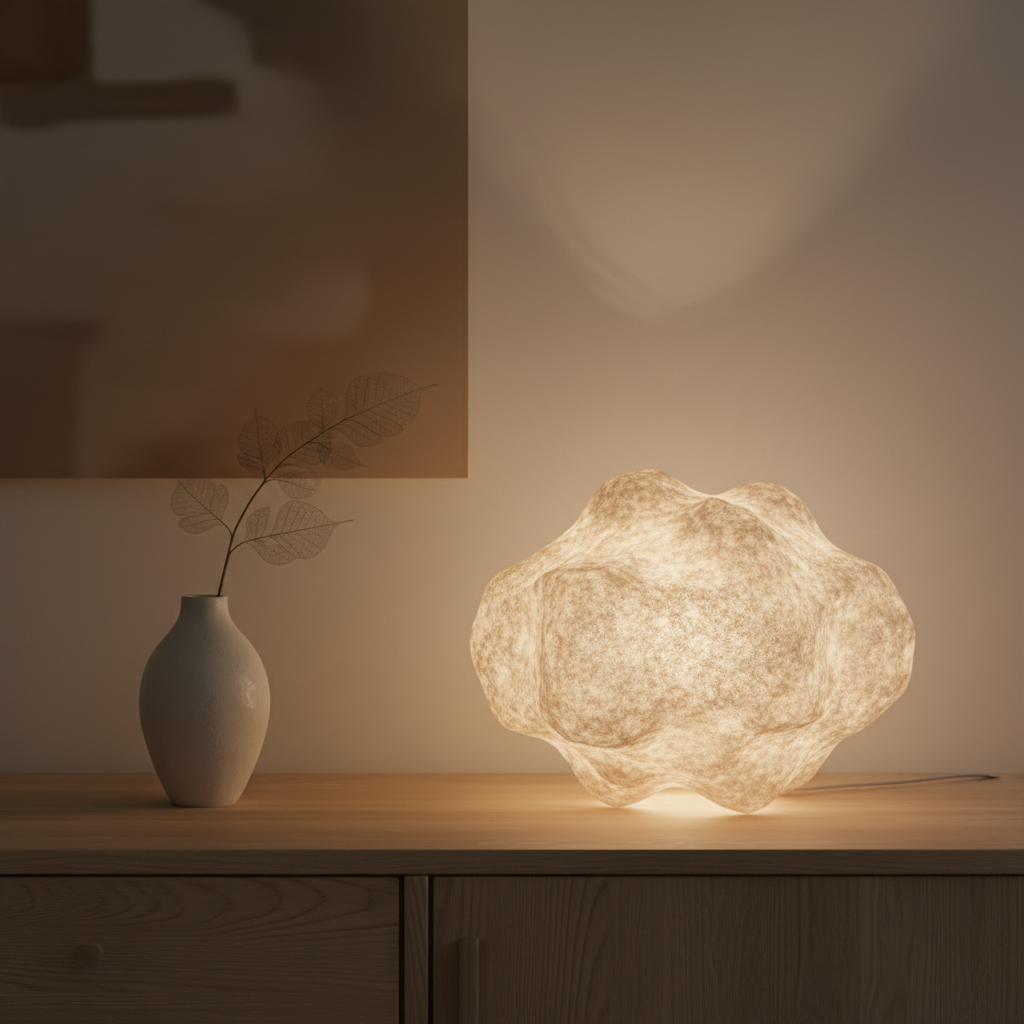
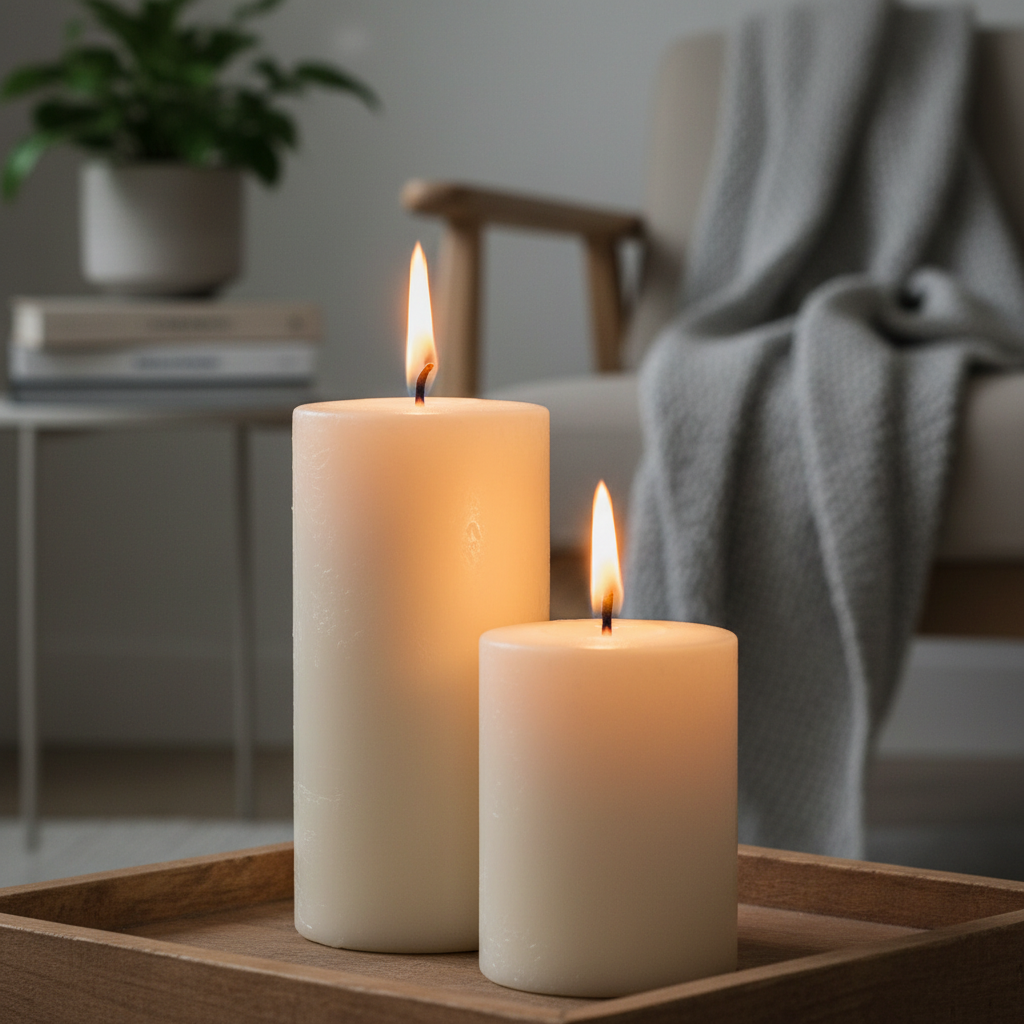
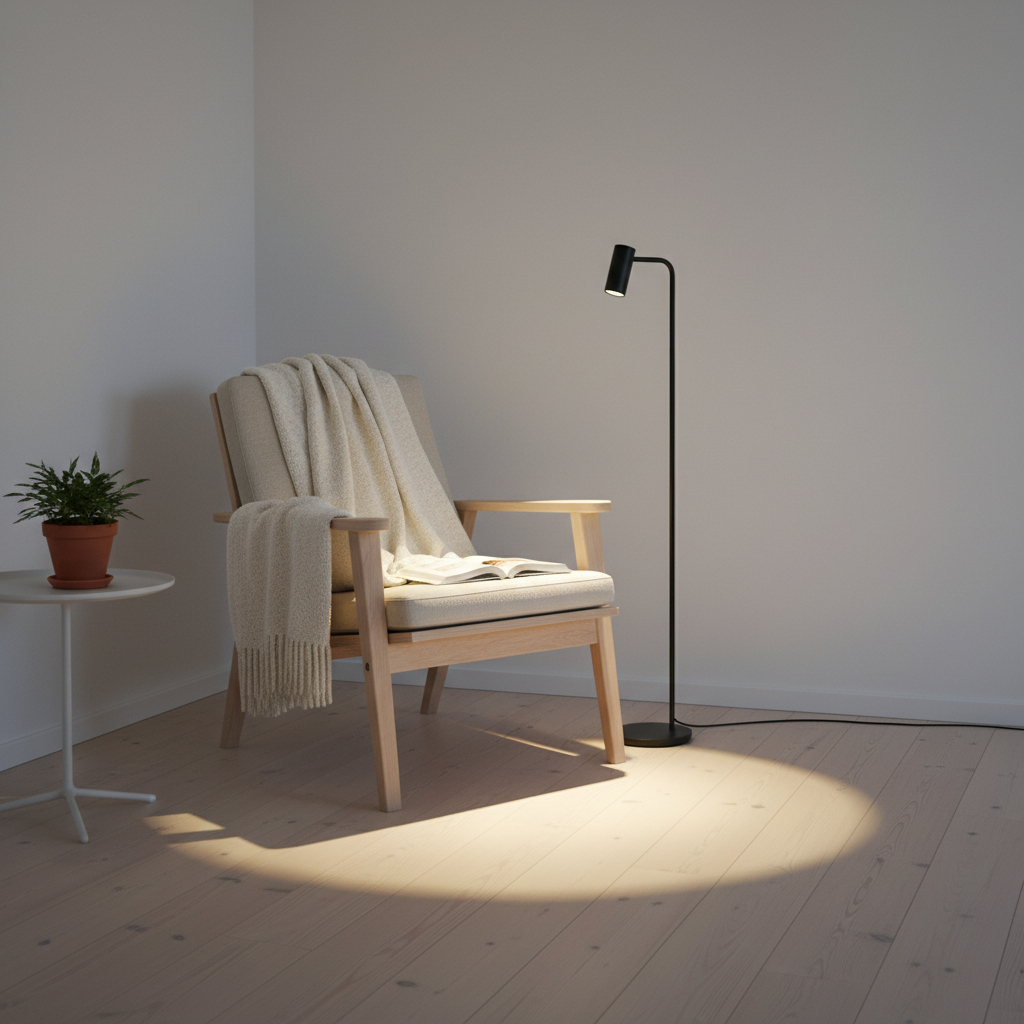
Add a gentle second source: a floor lamp, a plug-in sconce, a soft LED glow behind the headboard, or flameless candles.
Practical “Evening Transition” Examples
The 7 PM Switch
Turn off overhead lights. Use only lamps.
Middle-of-the-Night Friendly Light
Use a low amber nightlight so you don’t shock yourself awake.
Smart Lighting (if you have it)
Set a “Relax Mode” scene that warms the color, reduces brightness, and turns on automatically at a set time.
Common Mistakes (That Keep Bedrooms Feeling “Off”)
- Choosing bulbs by brightness (lumens) but ignoring Kelvin
- Using only one light source (overhead only)
- Too many cool white bulbs in the bedroom
- Lamps placed too low or too harsh (glare)
Fix: Warm bulbs + two light sources + softer placement.
Frequently Asked Questions
Is “Soft White” the same as “Warm White”?
Usually yes—often in the 2700K–3000K range. Always check the Kelvin rating on the box.
Can I use cool lighting in my bathroom?
Yes for morning tasks, but at night it can feel harsh. A dimmer or warm night setting helps.
Do smart bulbs help with sleep?
They can, especially if you use a consistent warm, dim scene at night. The habit matters more than the brand.
Final Thoughts
Your home should support how you want to feel. Choosing warm vs cool lighting with intention isn’t just decorating—it’s a form of self-care. If you want a calmer bedroom tonight, start with the simplest upgrade: swap to 2700K warm white bulbs and turn off the overhead light earlier.
Items mentioned in this post are linked for reference.